Looking after your wellbeing at Christmas


Unwrap what really matters.
Make looking after the wellbeing of yourself and your family a priority this festive season.
Christmas can be a joyful time but it can also feel overwhelming, especially when life is already busy, stressful or uncertain. Expectations, money worries, family pressures, loneliness and the rush of everyday life don’t disappear just because the calendar says it’s Christmas.
If this time of year feels heavy, overwhelming or complicated, you’re not alone. Our staff, volunteers and supporters have put together some practical ideas and resources to help you take care of your wellbeing.

Christmas can feel challenging...
and that’s completely normal!
Research shows that two in five adults feel more stressed or anxious in the run-up to Christmas, often due to financial pressures, social expectations and family tensions.
- You don’t have to pretend everything is perfect.
- You don’t need a flawless Christmas.
- What matters is looking after yourself and the people you care about.
Ways to take care of your wellbeing
Find small moments of calm.
Even a few minutes of stillness can help when emotions build up. Remember small steps can bring big relief.
- Making a warm drink and taking three slow breaths
- Spending five minutes outside, noticing the sounds around you
- Pressing pause before responding to messages when things feel tense
Stay grounded when things feel overwhelming.
If your thoughts are racing, grounding techniques can help bring you back to the present.
One simple method is the 5-4-3-2-1 technique:
- Notice 5 things you can see
- 4 things you can touch
- 3 things you can hear
- 2 things you can smell
- 1 thing you can taste
Grounding helps calm the body and mind, especially when stress peaks during busy times.
Let go of the ‘perfect Christmas’.
Christmas doesn’t need to look a certain way. For children and young people, the things that matter most are often; time with loved ones, feeling cared for and being connected. Not perfectly planned celebrations.
Give yourself permission to do Christmas in a way that feels real, manageable and meaningful for your family.
Set gentle boundaries.
It’s okay to say ‘no’ to plans that drain your energy or add to your stress.
You might choose to:
- Limit the number of gatherings you attend
- Set expectations around gift buying
- Take breaks when you need space
- Your wellbeing matters just as much as anyone else’s.

Support for adults
Low-cost virtual therapy options with eligible free places available.
Low-cost virtual therapy options, with free places available for people who receive an income or disability related benefit. Our free virtual assessments help us determine the best therapy for you, whether it’s Counselling or Cognitive Behavioural Therapy (CBT). Therapy options are available for adults aged 18 years and above.
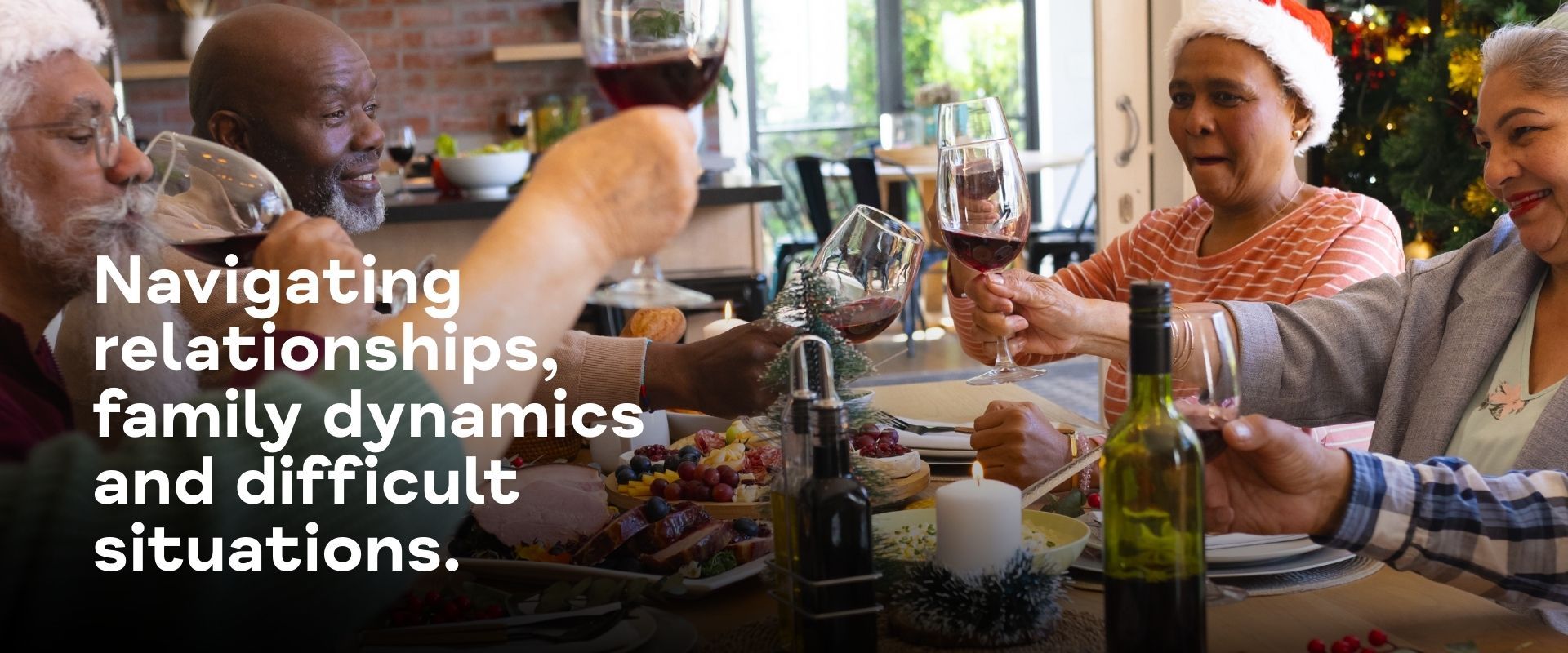
Top tips for navigating family dynamics.
Thank you to our Therapy & Coaching team, for sharing a short guide on how to navigate any challenging social gatherings.
Be realistic and accept that the festive season may not be perfect and be prepared for family dynamics to stay the same. Set realistic, attainable goals for yourself. This might be holding one calm conversation or managing your own reactions to any challenging situations.
Establish clear boundaries beforehand. Clearly define your physical, mental and emotional limits, and make family or friends aware. This could mean setting a time limit for a visit or deciding not to engage in certain topics. It’s okay to limit the amount of time you spend with family, to leave early or to step away for a few minutes to gather your thoughts.
Prioritise self-care. Schedule time for yourself to relax and chill out. Take breaks from overwhelming situations to step away and reset. Before a gathering, assess your own emotional state. If you feel stressed, anxious or angry – use techniques like deep breathing or mindfulness to regulate your emotions.
Communicate. Be honest, respectful and kind in your communication. If a challenging situation comes up, try to stay calm. Avoid tackling deep-seated issues. Try to understand where other family members are coming from, as communication difficulties often arise from their own fears or insecurities.
Focus on shared activities. Find common ground by participating in shared activities that everyone can enjoy, which can help shift the focus away from any potential conflicts.

Support for young people
Aged 10 to 19 (up to 25 with SEND) across Lancashire
With children facing an alarming increase in mental health challenges, we can help support them to find coping strategies and build resilience. Peer support helps young people feel less isolated by connecting them with others who have similar experiences or challenges; positively impacting their mental health, social skills and overall wellbeing.

Managing money worries at Christmas
Christmas can be an expensive time, and financial pressure is one of the biggest causes of stress during the festive season. You’re not alone if you’re feeling worried about the cost of gifts, food or activities.
Our Housing Team, have shared some simple, realistic ideas that can help ease the pressure and make Christmas feel more manageable.
Budgeting and gift ideas
Plan what you can afford. Take a gentle look at your finances and decide how much you can realistically spend this year. Setting a budget helps you stay in control and reduces stress later on.
Try Secret Santa. This can be a huge money-saver, especially for larger families or friendship groups. Everyone buys for one person only – and it keeps the fun without the cost.
Set a spending limit. Agree a price range (for example £5 – £10) and stick to it! Small, thoughtful gifts can mean just as much.
Handmade gifts can be meaningful. Baking, crafts, or framed photos often feel more personal and cost far less than shop-bought presents.
Shop at charity shops. For gifts, decorations, and other items, explore local charity shops in Lancashire. They are a great place to find affordable items, including second-hand clothing, books, and toys.
Compare prices. When you are shopping for gifts or festive goods, shop around and compare prices from different retailers. This can help you find the best deals.
Buy second-hand electronics. Shops like CEX or Cash Converters in Lancashire offer a good selection of second-hand electronics, providing a more budget-friendly
Planning Christmas food
Spread the cost over time. Start buying non-perishable items early. Things like tins, stuffing, frozen veg or gravy. It helps break the cost into manageable chunks.
Share the meal. If you’re hosting, invite friends or family members to each bring a dish. Christmas dinner becomes a shared effort, and less pressure sits on you.
Low-Cost Christmas Activities
Making memories doesn’t need to be expensive. Small moments can feel just as special as days out that cost more.
- Cosy movie nights at home
- Baking together
- Winter walks to get fresh air and reconnect
- Community activities, many local groups run free or low-cost festive events
Support for low-income families with children
HAF (Holiday Activities and Food) Clubs. Free holiday clubs offering sports, crafts and fun activities for children from Reception up to Year 11 who are eligible for free school meals. They give children a safe, supportive environment while easing pressure on families during the holidays.
Thank you to our Workplace Wellbeing & Training team for sharing this video from their Lancashire Wellbeing Business Network’s Christmas survival guide. If you would like more support videos for your staff or colleagues please contact training@lancashiremind.org.uk.
Wellbeing resources to download
Wellbeing festive top tips flyer
Five ways to wellbeing activity
Gratitude Jar Activity
Related News & Events