Introducing Ellis - CBT Therapist

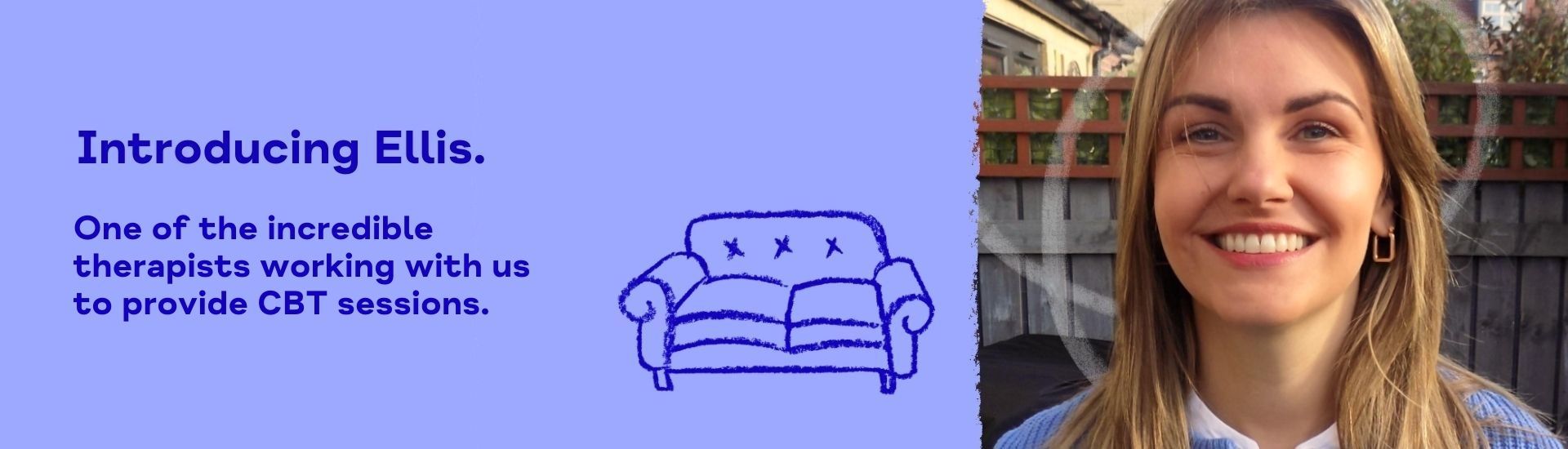
Hello, I’m Ellis.
Cognitive Behavioural Therapist
My therapeutic approach is underpinned by the idea that our thoughts and behaviours play a key role in our emotions. I take a mainly cognitive approach, where I work collaboratively with clients to discover underlying beliefs which may be shaping their actions and emotions day-to-day.
I have a flexible approach to therapy and create a warm, supportive session tailored to each person. I have a background in nursing, meaning I can help you make informed decisions about medication and how it can work alongside therapy.
"A useful thing to remember is that our thoughts are not facts!"
Areas of Special Interest/Experience
- Perinatal depression and anxiety disorders (the perinatal period being through pregnancy and up to two years after childbirth)
- Trauma/PTSD including birth trauma
- OCD
Qualifications/Training
- BSc. Psychology and Criminology
- PGDip. Mental Health Nursing
- PGCert. Primary Care Mental Health
- PGDip. Cognitive Behavioural Psychotherapy
- Additional qualifications in Primary Care MH Supervision of therapists an EMDR.
Useful Hints and Tips
A useful thing to remember is that our thoughts are not facts!
Research suggests we have around 60,000 thoughts per day, but we only recognise and remember those few which we are hard-wired to notice. These thoughts can look similar across different situations and even across different people. In CBT, we call them our ‘unhelpful thinking styles’.
If you notice a thought which affects your mood, emotions or even your behaviour it can help to consider which thinking style it falls into. You may be catastrophising (jumping straight to the worst-case scenario), mind reading (assuming we know what others are thinking) or thinking in black and white (one way or another with no room for manoeuvre).
Those above are especially common, but there are many other typical styles of thinking in various sources online. Knowing what style of thinking we are using helps us to see the thought more rationally, and even try to balance it out with a less ‘unhelpful’ perspective.

Explore our tailored therapy options.
Receive therapy tailored to your specific needs
Our virtual assessments help us determine the best therapy for you, whether it’s Counselling or Cognitive Behavioural Therapy (CBT). Therapy options are available for adults aged 18 years and above.
Ways you can support Lancashire Mind



Related News & Events